The Omni-Channel Imperative: A Comprehensive Masterclass in Modern Social Media Marketing
Introduction: The Fragmentation of the Global Public Square
There was a remarkably naive period in the early 2010s when digital marketers operated under the assumption that the internet would eventually consolidate into a singular, monolithic public square. We genuinely believed that one dominant platform would serve as the universal bulletin board for humanity, a place where a single corporate message could be broadcast to the entire globe simultaneously with maximum efficiency. We were, quite naturally, entirely mistaken.
The digital landscape of 2026 resembles a heavily fragmented archipelago. Each digital island possesses its own distinct dialect, its own fiercely guarded cultural mores, and its own algorithmic laws of physics. What constitutes a brilliant, conversion-driving thesis on a professional network will be met with outright hostility on a community forum. A short-form video that captivates millions of teenagers on a Friday evening will look hopelessly frantic and unprofessional if ported directly to a corporate messaging broadcast on a Monday morning.
As a social media marketer navigating the labyrinthine complexities of this era, my mandate is not simply to broadcast a client’s message as loudly as possible. The mandate is to architect a highly calibrated symphony of attention across these disparate channels. The modern consumer does not exist in a vacuum. Whether they are a procurement director for a multinational logistics conglomerate or a university student purchasing a bespoke skateboard, they traverse multiple platforms daily. Furthermore, they subconsciously adapt their psychological state to match the specific environment of the app they are currently opening. The average user in 2026 hops between nearly seven different social networks every single month.
This comprehensive masterclass is designed to dissect the entire spectrum of modern social media marketing. We shall move far beyond the rudimentary, pedestrian advice of merely posting consistently. We will examine the structural integrity, the comparative strengths, the psychological triggers, and the empirical realities of the channels that define the current era. This is the definitive operational blueprint for brands seeking to establish undeniable authority and generate measurable revenue across the global digital estate.
Chapter One: The Foundational Philosophy and the Omni-Channel Fallacy
Before we delve into the granular mechanics of individual platforms, we must address the most pervasive and destructive fallacy in our industry. This is the belief that a brand must maintain an equally active, high-volume presence on every single conceivable social media channel. I refer to this as the omni-channel trap.
True omni-channel marketing does not mean ubiquitous, exhausting noise. It means strategic, highly deliberate presence. A luxury B2B software consultancy specialising in supply chain logistics has absolutely no business performing choreographed dances on short-form video platforms. Conversely, a direct-to-consumer cosmetic brand targeting teenagers would be foolish to limit its communications to dry, thousand-word whitepapers on a professional networking site.
The architecture of your campaign must be dictated entirely by the ‘Buying Committee’ in the B2B sector or the ‘Consumer Tribe’ in the B2C sector. The objective is to map the specific digital territory your target demographic naturally inhabits and to build formidable outposts exclusively within those specific regions.
Currently, there are approximately 5.66 billion active social media users worldwide, and they spend an average of two hours and forty minutes daily engaged with these applications. This represents an unprecedented ocean of human attention. However, attempting to boil the ocean is a foolproof recipe for commercial failure. You must identify your specific current within that ocean and ride it with absolute precision.
The strategy begins with a ruthless audit of resources. Creating bespoke content for six different platforms requires a massive infrastructure of copywriters, videographers, community managers, and data analysts. If a brand attempts to stretch a small marketing budget across the entire digital ecosystem, the resulting content will inevitably be mediocre, highly generic, and entirely ignored by algorithms that only reward exceptional native content. It is infinitely more profitable to achieve absolute dominance on two carefully selected channels than to languish in mediocrity across seven.
Chapter Two: The Corporate Behemoth and B2B Dominance (LinkedIn)
When we discuss the business-to-business sector, the conversation begins and frequently ends with LinkedIn. The platform has crossed the threshold of one billion members globally, exhibiting particularly aggressive growth in the Asia-Pacific region. It is no longer a digital waiting room for those seeking employment; it is the premier global amphitheatre for corporate discourse.
The 2026 LinkedIn algorithm operates on a very specific set of priorities. It has declared war on artificial mediocrity. Following the initial flood of AI-generated content in recent years, the platform’s machine learning apparatus now actively penalises generic, templated posts that lack a distinct human voice. It specifically hunts for markers of true expertise, such as first-person narratives tied to real-world corporate events, industry-specific nomenclature, and contrarian perspectives that spark genuine debate.
For founders, C-Suite executives, and designated brand representatives, LinkedIn is the primary engine for thought leadership. The content strategy here must be divided into rigid pillars. First, the ‘Domain Expert’ pillar involves publishing deep, highly technical insights regarding your specific sector. This proves your empirical competence. Second, the ‘Visionary Architect’ pillar dictates the future of the industry, challenging widely held assumptions and offering well-reasoned macroeconomic forecasts.
Furthermore, we must respect the metric of ‘dwell time’. The algorithm tracks the exact milliseconds a user spends consuming your content. This is why document carousels (multi-page PDF uploads) currently generate vastly higher engagement rates than simple text posts. Swiping through a well-designed carousel requires sustained physical interaction, which signals deep interest to the algorithm and subsequently turbocharges the post’s distribution.
Outbound engagement is equally critical. The most sophisticated B2B marketers do not merely publish content and log off. They execute a strategy of asymmetric networking. This involves identifying the top decision-makers in their target accounts and leaving highly calibrated, micro-article comments on their posts. By adding genuine intellectual value to the discussions initiated by your prospects, you position yourself as a respected peer long before you ever send a direct commercial pitch. B2B marketers consistently name LinkedIn as their strongest channel for driving business impact.
Chapter Three: The Visual Storefront and Social Commerce (Meta Ecosystem)
While LinkedIn rules the boardroom, the Meta ecosystem (comprising Instagram and Facebook) remains the undeniable, pulsating engine of global B2C commerce. Instagram usage recently climbed to 2.3 billion monthly active users. The platform has evolved completely from a simple photo-sharing application into a highly sophisticated, frictionless visual storefront.
The integration of social commerce into the Meta infrastructure means that the gap between product discovery and the final purchase has been almost entirely eradicated. In previous eras, a consumer had to see an advertisement, open a web browser, search for the brand, navigate to the product page, and enter their payment details. Today, a consumer can view a beautifully curated Instagram Reel, tap the product tag, and complete the purchase using stored biometric payment credentials without ever leaving the application.
The strategy on Instagram relies on a potent combination of aspirational aesthetics and rigorous performance marketing. The organic reach for brand pages on Meta properties has been steadily throttled for years. We must accept the empirical reality that this is largely a ‘pay-to-play’ arena for corporate entities. However, when supported by a robust paid media budget, the targeting capabilities of the Meta advertising engine remain terrifyingly precise.
A successful campaign requires a high volume of creative testing. We do not run one polished video and hope for the best. We deploy fifty variations of a short-form video, testing different ‘hooks’ (the first three seconds of the video), different musical overlays, and different calls to action. The machine learning algorithm quickly identifies which variation is generating the lowest cost per acquisition and automatically routes the budget toward the winning asset.
Facebook, despite endless predictions of its demise, remains the largest platform globally with 3.1 billion monthly active users. It is particularly potent for targeting demographics above the age of thirty-five and remains the premier platform for community building through private Facebook Groups. Brands that cultivate highly engaged, private groups around their products create a fiercely loyal cohort of brand ambassadors who will defend the company against criticism and provide invaluable, real-time product feedback.
Chapter Four: The Short-Form Video Vanguard and Algorithmic Dopamine (TikTok and YouTube Shorts)
If the Meta ecosystem represents the established, highly polished shopping mall, the short-form video platforms represent the chaotic, high-energy, constantly shifting street market. These platforms operate on entirely different algorithmic principles. They prioritise the ‘Interest Graph’ over the ‘Social Graph’. This fundamental shift means content is served to users based strictly on their behavioural viewing habits and total watch time, rather than who they have actively chosen to follow.
We must address TikTok with absolute clarity and geopolitical context. The platform has exceeded 1.6 billion monthly active users globally and operates as an algorithmic dopamine engine capable of generating unprecedented organic reach. However, we must state this unequivocally: TikTok remains completely banned in India due to national security regulations. Therefore, for domestic Indian campaigns targeting local consumers, it is an absolute non-entity. We do not waste a single moment of client resources discussing it for domestic deployment.
Yet, for our clients targeting overseas markets in the United Kingdom, the Americas, Europe, or Southeast Asia, TikTok is an indispensable lever for hyper-growth. We offer comprehensive TikTok management and creative production exclusively for these international campaigns.
The strategy for succeeding on TikTok requires completely abandoning corporate polish. If a video looks like a traditional television commercial, the audience will scroll past it in less than a second. The content must feel native, largely user-generated, and slightly unhinged. It relies heavily on participating in rapidly evolving audio trends, utilising native text overlays, and embracing a lo-fi, handheld aesthetic. Brands that succeed here do not make advertisements; they make pure entertainment that coincidentally features a product.
For the Indian market, and indeed globally, YouTube Shorts has aggressively filled the void. YouTube as a whole attracts 2.9 billion monthly active users, and the Shorts format allows brands to tap into the same interest-graph mechanics as TikTok. The added advantage of the YouTube ecosystem is the powerful integration with Google Search. A highly optimised YouTube Short continues to surface in search results for months after publication, whereas a TikTok video has a remarkably short shelf life before it disappears into the algorithmic ether.
Short-form social videos drive the highest return on investment among video formats for marketers today. The production pipeline requires incredible agility. An agency managing this channel cannot operate on a monthly approval cycle. When an audio trend emerges on a Tuesday, the brand must script, shoot, edit, and publish their participation by Thursday, or the cultural moment will have passed entirely.
Chapter Five: Ephemeral Intimacy and Augmented Reality (Snapchat)
Snapchat is frequently, and quite unfairly, dismissed by older corporate executives as a confusing relic of the mid-2010s. This is a profound analytical error that leaves millions in potential revenue on the table. Snapchat retains a vice-like grip on the Gen Z demographic, functioning as their primary utility for private communication with their closest social circles.
Its commercial utility lies not in public, viral broadcasting, but in intimate, ephemeral connection and highly advanced augmented reality (AR). Snapchat is the quiet, undisputed powerhouse of AR marketing. The camera is the central interface of the application, and users open it dozens of times a day strictly to interact with visual filters.
Brands that develop bespoke AR lenses achieve a level of engagement that static imagery simply cannot replicate. A cosmetic company can allow a user to virtually ‘try on’ five different shades of lipstick in ten seconds. A furniture retailer can allow a user to place a highly accurate, 3D model of a sofa directly into their living room using their smartphone camera. A fashion brand can map digital clothing onto the user’s body with astonishing physics and fabric rendering.
Data indicates that Snapchat AR try-on features increase purchase intent by a remarkable twenty-five percent. When a consumer interacts with an AR lens, they are not passively watching an advertisement; they are actively playing with the brand’s intellectual property. Furthermore, when they capture a photo using that branded lens and send it directly to a close friend, the resulting recommendation carries the absolute highest level of social proof. It is a highly potent tool for driving direct engagement through playful utility rather than aggressive, interruptive salesmanship.
Chapter Six: The Meritocracy of the Niche and High-Trust Forums (Reddit)
We now enter what is arguably the most hostile environment on the internet for traditional marketers, yet simultaneously one of the most lucrative if navigated with absolute precision. Reddit is a platform composed of thousands of hyper-specific, fiercely independent communities known as subreddits. In early 2025, Reddit reached 116 million daily active users, representing a massive surge in engagement.
The culture of Reddit is fundamentally anti-corporate. If you attempt to execute a standard promotional campaign by creating an account and immediately spamming a subreddit with links to your product page, you will be swiftly banned by the volunteer moderators and publicly, brutally ridiculed by the users.
Marketing on Reddit requires extreme humility and a profound understanding of community mechanics. You must establish genuine trust before you ever attempt to extract commercial value. This is achieved not by hiding behind a faceless corporate brand account, but by deploying a designated subject matter expert (perhaps the founder or a lead engineer) to participate authentically.
You must answer questions without expectation of reward. You must provide deep, technical solutions to complex problems. You must accumulate ‘karma’ (the platform’s reputation currency) over a sustained period of months. Around 18.2 percent of users utilise Reddit specifically for research. They are actively seeking unvarnished, brutally honest reviews and technical advice from their peers.
When you eventually do mention your product, it must be framed organically within the context of a highly specific solution to a problem the community is currently debating. For example, a cybersecurity vendor should not post an advertisement for their software; they should publish a detailed post-mortem of a recent global data breach, explaining exactly how the hackers bypassed standard protocols, and then subtly mention in the final paragraph how their specific architecture prevents that exact vector of attack.
Reddit is a strict meritocracy. The users are highly intelligent, highly sceptical, and incredibly loyal to brands that respect their intelligence. You must earn the absolute right to sell to them. Furthermore, Google’s expanded partnership with Reddit in recent years has drastically amplified the visibility of Reddit content in standard search results, making community participation an essential pillar of modern search engine optimisation strategies.
Chapter Seven: Dark Social and Direct Distribution Ecosystems (WhatsApp Channels)
We now arrive at one of the most consequential developments in recent marketing history. This is the rapid rise and weaponisation of WhatsApp Channels for corporate broadcasting.
For many years, marketers viewed WhatsApp solely as a reactive customer support utility or a tool for highly transactional updates (such as shipping notifications). WhatsApp remains the most-used messaging application globally with an astonishing 2.8 billion users. The introduction of the Channels feature has transformed it into a formidable, proactive broadcast instrument.
We operate in an era where consumers are completely exhausted by algorithmic manipulation. They never quite know if they are seeing a post on their feed because they actively chose to follow that brand, or because a machine learning model decreed it would maximise their screen time. WhatsApp Channels circumvent this algorithmic interference entirely.
This is the ultimate ‘Dark Social’ environment. When a brand broadcasts a message via a WhatsApp Channel, it lands directly in the user’s most intimate digital space: their private messaging inbox, sitting comfortably right next to messages from their spouse and their parents. The metrics surrounding this level of access are truly staggering. Measured using read receipts, WhatsApp campaigns can achieve open rates bordering on absolute certainty, making it one of the highest-engagement marketing channels available in the modern economy.
However, this unprecedented intimacy is a severe double-edged sword. If an executive decides to treat a WhatsApp Channel like a traditional, high-volume email newsletter, spamming the audience with daily promotional flyers and discount codes, the opt-out rate will be instantaneous and completely brutal. Once a user mutes or leaves a channel, reclaiming their attention is practically impossible.
The strategy for WhatsApp Channels requires supreme editorial restraint. It must be treated as an exclusive VIP club. The content broadcast here must possess extremely high intrinsic value. It should be utilised for exclusive early access to limited product drops, rapid macroeconomic updates for B2B clients, or raw, unedited voice notes from the founder discussing a recent industry shift.
It is a channel designed exclusively for nurturing your absolute warmest prospects and rewarding your most loyal brand advocates. It is emphatically not a tool for cold acquisition or brand awareness. The tone must be conversational, urgent, and highly relevant. We advise clients to restrict their WhatsApp broadcasts to a maximum of two highly potent messages per week, ensuring that every time that specific notification chime sounds, the consumer instinctively knows the information will be worth their immediate attention.
Chapter Eight: The Micro-Messaging Ecosystem (X and Threads)
The landscape of real-time, text-based micro-messaging has undergone significant turbulence in recent years. X (formerly Twitter) is projected to have nearly 450 million users worldwide in 2026. It remains the absolute epicentre for breaking news, political discourse, and live cultural events.
However, the environment on X is notoriously volatile. For brands, participating on X requires a highly agile PR team capable of navigating rapid shifts in public sentiment. The most successful brands on X employ a distinctly casual, often highly irreverent tone of voice. They engage in banter with competitors and respond to customer service queries with a blend of rapid efficiency and dry wit.
It is crucial to note that more than half of the user base on X is male. For brands targeting a specifically male demographic with interests in sports, cryptocurrency, technology, or finance, X remains an incredibly potent advertising platform.
Meta’s alternative, Threads, has secured a significant foothold by integrating seamlessly with the existing Instagram user base. Threads currently offers a somewhat more sanitized, brand-safe environment compared to the chaotic town square of X. The strategy on Threads relies less on rapid-fire news commentary and more on thoughtful, text-based community building and engaging directly with the creators who already dominate the Instagram ecosystem.
A comprehensive marketing strategy must monitor both platforms closely. We typically advise brands to utilise X for rapid customer service resolution and live event commentary, while deploying Threads for deeper, more community-focused textual engagement. The key to both platforms is absolute authenticity; polished corporate press releases perform dismally in spaces designed for raw, unfiltered conversation.
Chapter Nine: The Artificial Intelligence Orchestration Layer and 2026 Analytics
No masterclass written in the year 2026 would be remotely complete without confronting the fundamental, seismic shift brought about by artificial intelligence. We have moved entirely beyond the rudimentary era of using AI merely to generate simple blog outlines or check grammar.
The current operational standard involves agentic AI executing autonomous campaign decisions at a scale previously unimaginable. AI is now utilised to orchestrate multi-channel campaigns, qualify inbound leads through natural language processing, and personalise creative touchpoints across the entire buying committee without requiring human intervention at every step.
For instance, an AI orchestration layer can analyse the performance of a video asset on Instagram, determine that a specific three-second segment is driving the highest conversion rate among women aged 25 to 34, automatically recut the video to feature that segment prominently, and dynamically increase the advertising budget for that specific demographic across both Meta and YouTube simultaneously.
About 94 percent of marketers now plan to use AI in their content creation processes. However, the profound paradox of this automation is that it has drastically increased the market premium on human authenticity. As the internet floods with synthetic, perfectly structured, yet entirely soulless content, consumers are actively, desperately seeking out the jagged edges of real human experience.
If your brand relies solely on AI to write its thought leadership, it will inevitably sound exactly like every other brand relying on the same underlying language models. Your strategy must utilise AI for operational efficiency, data analysis, and rapid formatting, whilst fiercely protecting the idiosyncratic, opinionated human voice of the brand in the final output. The AI is your brilliant, tireless assistant; it must never become your Chief Marketing Officer.
Furthermore, our approach to analytics has matured significantly. We comprehensively reject the illusion of vanity metrics. We do not report on ‘impressions’ or ‘likes’ unless they correlate directly to commercial objectives. A strategy must focus relentlessly on sanity metrics.
When tracking social media return on investment, elite teams focus primarily on engagement depth (68 percent), conversions (65 percent), and ultimate revenue impact (57 percent). We measure pipeline velocity, brand-assisted deal size, the quality of inbound direct messages, and the reduction in customer acquisition costs. We build attribution models that acknowledge the reality of the multi-channel journey: understanding that a prospect might discover the brand on a YouTube Short, read an authoritative post on LinkedIn three weeks later, and finally convert via a highly targeted WhatsApp Channel broadcast two months after the initial touchpoint.
Chapter Ten: Anticipating the Executive Sceptic (The Counterarguments)
As a strategist, I frequently present this complex, multi-channel architecture to boardrooms filled with seasoned, highly cynical executives. The objections follow a highly predictable pattern, and it is a professional requirement to dismantle them intellectually with empirical data.
Objection One: “Our audience consists of serious professionals. They are simply not scrolling on platforms like Snapchat or Reddit.”
This argument relies on the deeply flawed assumption that a Chief Financial Officer ceases to be a human being the moment they log out of their corporate email. Professionals use Reddit to discuss their personal hobbies, to seek unbiased reviews of complex enterprise software, and to troubleshoot highly technical architectural problems. They use WhatsApp to communicate with their families. The context of their attention changes, but the attention is absolutely present. The strategic key is to match the message to the medium. We absolutely do not pitch enterprise accounting software using dancing filters on Snapchat, but we absolutely will use Reddit to target highly technical systems architects who rely on the platform for peer-to-peer troubleshooting.
Objection Two: “Managing a WhatsApp Channel feels far too intrusive. We will inevitably alienate our most valuable customers.”
A channel is only intrusive if the content it delivers lacks value. If a customer has explicitly, voluntarily opted into your WhatsApp Channel, they have granted you unprecedented permission to enter their inner digital sanctum. The alienation only occurs if you abuse that profound privilege with generic, high-volume sales copy. If you provide them with exclusive market intelligence, early access to critical updates, or genuine utility that they cannot find anywhere else on the internet, they will not merely tolerate the notification; they will actively welcome it.
Objection Three: “We simply cannot afford the financial or human resources required to manage six different platforms simultaneously with high-quality native content.”
This is a highly valid operational concern, which is precisely why strategic prioritisation is the bedrock of our methodology. You do not launch six channels simultaneously. You establish absolute dominance on your primary channel (for example, LinkedIn for a B2B consultancy, or Instagram for a fashion brand). Once that primary engine is running smoothly and generating reliable revenue, you repurpose the core intellectual property into formats suitable for secondary channels. A brilliant, hour-long podcast interview with the founder can be sliced into fifteen short-form videos for YouTube Shorts, transcribed into a detailed, analytical article for LinkedIn, and summarised as a punchy, bulleted list for an exclusive WhatsApp broadcast. It is an exercise in intellectual leverage, not merely working harder.
Objection Four: “We ran a social media campaign three years ago and it generated zero measurable return on investment. It is a branding exercise, not a sales tool.”
An amateur strategy executed without rigorous measurement will inevitably yield amateur results. If your previous attempt involved a junior intern posting generic corporate brochures on Facebook once a week and wishing your employees a happy work anniversary, it was not a social media strategy. It was an administrative chore. True return on investment is generated through the rigorous, insight-driven, multi-channel methodology detailed in this blueprint. When 73 percent of consumers state they will switch to a competitor if a brand does not respond to them on social media, it ceases to be a mere branding exercise and becomes a critical pillar of customer retention and revenue protection.
Chapter Eleven: The Architecture of the Modern Social Media Agency
Executing this incredibly complex symphony of attention requires a highly specialised operational infrastructure. A modern social media agency in 2026 does not merely consist of a few enthusiastic graduates with smartphones. It requires a formidable array of specialists.
The Strategic Core
The foundation is the strategy team. They are responsible for conducting the initial digital audit, mapping the demographics, and identifying the specific digital territories where the client’s target audience congregates. They determine the core narrative and ensure that the brand’s voice remains consistent, even as it adapts to the cultural nuances of different platforms.
The Creative Production Pipeline
The days of static, stock-photo imagery are entirely over. The creative team must operate essentially as a high-speed digital newsroom. They require videographers capable of shooting cinema-quality footage for YouTube, alongside agile creators who understand the lo-fi, handheld aesthetic required for platforms targeting younger demographics. The copywriting team must possess the literary flexibility to draft a heavily researched, academic whitepaper for LinkedIn in the morning, and a witty, culturally relevant micro-message for X in the afternoon.
The Community Management Vanguard
Publishing the content is merely the opening gambit. The true value is extracted in the comment sections and direct messages. Community managers are the frontline diplomats of the brand. They must possess the emotional intelligence to de-escalate a frustrated customer complaint on a public forum, the technical knowledge to answer detailed product queries on Reddit, and the wit to engage in playful banter with adjacent brands on Threads. They are the human face of the corporate entity.
The Data Science and Performance Analytics Division
This team operates the engine room. They manage the substantial paid advertising budgets, continuously testing thousands of creative variations across the Meta and YouTube ecosystems. They interpret the complex attribution models, filtering out the noise of vanity metrics to provide the C-Suite with crystal-clear reporting on pipeline velocity, customer acquisition costs, and total return on investment. They are responsible for feeding actionable intelligence back to the creative team, dictating which hooks are retaining attention and which formats are driving the highest conversion rates.
Chapter Twelve: The Ethical Imperative and Cultural Stewardship
In our relentless pursuit of algorithmic dominance and commercial leverage, we must ultimately confront the ethical imperative of our profession. We wield instruments capable of shaping human behaviour on a massive scale.
Sustainability-focused content is expected to heavily dominate brand messaging moving forward, with 65 percent of consumers explicitly stating a preference for eco-conscious campaigns by the end of 2026. However, this cannot be mere ‘greenwashing’. The modern consumer possesses an incredibly refined radar for corporate hypocrisy. If a brand promotes sustainability on social media while engaging in exploitative labour practices in its supply chain, the internet will expose the discrepancy with ruthless efficiency.
We must also respect the mental bandwidth of our audience. The digital ecosystem is overwhelmingly loud, frequently toxic, and highly addictive. As architects of this environment, we have a responsibility to ensure that the content we inject into the public square possesses genuine utility, educational value, or at the very least, harmless joy. We must absolutely refuse to participate in the dissemination of manufactured outrage or engagement bait designed purely to exploit human anxiety.
Conclusion: The Enduring Legacy of the Digital Architect
We have surveyed the vast, incredibly complex topography of the modern digital ecosystem. From the erudite, high-stakes boardroom discourse of LinkedIn to the ephemeral, augmented reality playgrounds of Snapchat; from the hyper-engaged, highly privileged intimacy of WhatsApp Channels to the stringent, anti-corporate meritocracy of Reddit, the landscape is utterly unforgiving to the unprepared and the inauthentic.
Social media marketing is no longer a peripheral activity to be relegated to a junior intern or an afterthought in the quarterly budget. It is the primary, indispensable interface between your corporate entity and the global economy. By profoundly understanding the unique psychological state your consumer occupies on each individual platform, and by meticulously tailoring your intellectual property to match that specific state, you cease to be a mere advertiser shouting into the void. You become a welcomed, highly respected guest in their daily digital life.
The platforms will inevitably continue to evolve, the underlying algorithms will undoubtedly shift in unpredictable directions, and new, disruptive challengers will constantly emerge. Yet, the foundational principles of this masterclass remain absolute and unyielding: you must deeply respect the unique culture of the channel, you must provide undeniable, tangible value before you ever attempt to extract revenue, and you must allow your genuine expertise to speak far louder than your paid marketing budget.
The digital archipelago is vast, the algorithms are waiting, and the global audience is assembled. It is time to build your empire.
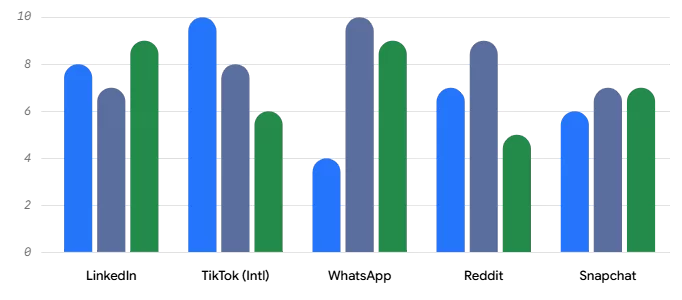
To crystallise the comparative strengths and strategic utility of these platforms, please review the analytical visualisation below, which charts the effectiveness of each channel across key commercial metrics.